Two federal judges order Trump admin to continue SNAP benefits. Follow live updates.
- Oct 31, 2025
- 8 min read
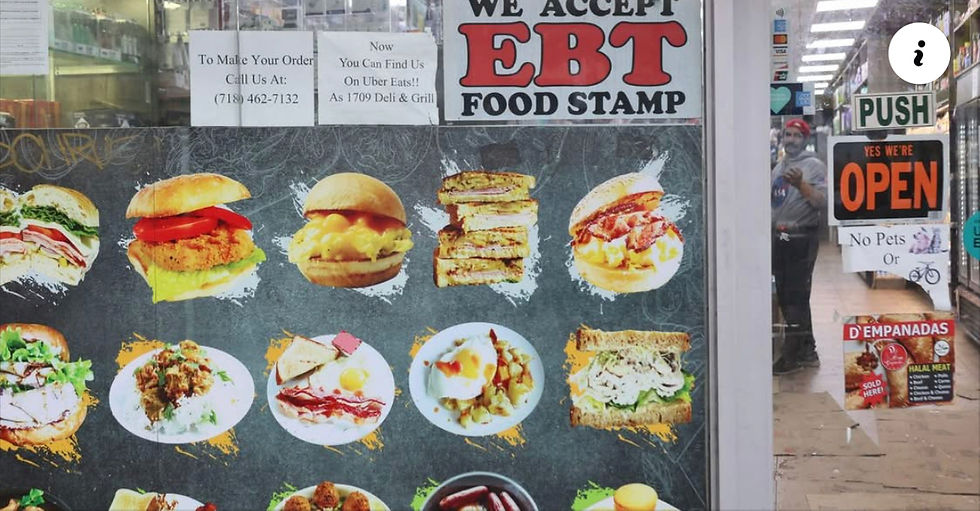
What is becoming clearer, however, is the acute pain the shutdown is inflicting on millions of Americans, including families nervous about their food assistance lapsing.
"Donald Trump is weaponizing hunger," saidSenate Minority Leader Chuck Schumer, D-New York.
Flight disruptions are mounting, too, to the point that even senators had trouble leaving the nation's capital Thursday amid a ground stop at a regional airport. On the same day, Vice President JD Vance said worries were omnipresent among a group of airline industry leaders he convened at the White House.
"Everybody here is very worried that we're going to see more delays, more stresses on the people who are actually making the aviation system run," he said. "Stop this craziness and open the government."
Judges order SNAP food benefits to continue
A federal judge in Rhode Island said he would order the Trump administration to continue providing SNAP food benefits despite the government shutdown.
The Supplemental Nutrition Assistance Program benefits for 42 million low-income Americans are set to run out Nov. 1. However, the Rhode Island State Council of Churches, the National Council of Nonprofits and several other nonprofits and mayors filed a federal lawsuit to keep benefits flowing.
Justice Department lawyers have argued it isn’t possible to provide partial benefits for the program, which spends up to $9 billion per month, from a $5 billion contingency fund.
U.S. District Judge John McConnell said at a hearing on Oct. 31 that he would block the administration from suspending benefits during the shutdown.
"There is no doubt, and it is beyond argument that irreparable harm will begin to occur if it hasn't already occurred in the terror it has caused some people about the availability of funding for food, for their family," McConnell said during a virtual hearing.
In a brief written order, McConnell told the U.S. Department of Agriculture to use contingency funds to continue providing benefits. He asked the government to report by noon on Nov. 3 about the status of the distribution.
“For now, these families can continue putting food on their tables, and thousands of nonprofit food banks, pantries and other organizations across the country can avoid the impossible burden that would have resulted if SNAP benefits had been halted,” said Diane Yentel, CEO of the National Council of Nonprofits.
A second federal judge in Boston ruled that the government is “required” to continue providing SNAP benefits, but that she would give officials until Nov. 3 to decide how to do so.
U.S. Judge Indira Talwani ruled the government has the option to provide reduced benefits with contingency funds or shift other discretionary funds to cover the shortfall.
Like McConnell, Talwani asked the government to notify her by Nov. 3 whether the administration will authorize reduced benefits or shift other funding to meet the program’s needs. She kept any order to the government "under advisement" until the government replies
Talwani held a hearing Oct. 30 in the case filed by Democratic officials from 25 states who urged her to force the use of $5 billion in contingency funding to keep benefits flowing. But Justice Department lawyers said it wasn’t possible to provide partial benefits for the program that spends up to $9 billion per month.
– Bart Jansen
Cutting off SNAP, WIC would hit single mothers hard
As the states that sued the Trump administration to keep SNAP benefits flowing through November await a decision from a federal judge, families across the U.S. who rely on SNAP and WIC programs are bracing for the month ahead.
This is especially true of single mothers like Kayla Lawson, a North Carolina senior center worker and mother of three. Like many mothers who utilize WIC, she relies on the small monthly stipend to buy the special formula her 6-month-old daughter, who was born premature, needs.
"We may have to skip out on a bill or just try to maybe make a partial payment or something like that towards some of it," she said.
While WIC got a temporary cash infusion earlier this month, the National WIC Association has warned that those funds will dry up within the first week or so of November, along with SNAP.
Ashley Trent, a single mother of six in Bloomington, IL, works full-time helping people without stable housing find a safe place to live. When she picks up the phone, she said, she often finds the person on the other side is in a similar situation to her own. Without the WIC and SNAP benefits that help her feed her children, she is already calculating which bills she can afford to skip to keep food on the table.
"I'm on the phone with somebody that's in the same boat as I am," she said. "A lot of people work 40 to 50 hours a week and cannot afford a house, or cannot afford rent or food."
– Mary Walrath-Holdridge
Senate GOP leaders reject Trump’s call to end filibuster
Top Senate Republicans are standing firm behind the chamber’s filibuster rule after President Donald Trump called on them to ditch the 60-vote requirement and pass shutdown legislation with a simple majority.
Spokespeople for Senate Majority Leader John Thune and his chief deputy, Senate Majority Whip John Barrasso, told USA TODAY the lawmakers continue to support the filibuster.
“Leader Thune’s position on the importance of the legislative filibuster is unchanged,” Thune’s office said in a statement.
Barrasso spokeswoman Kate Noyes also said the senator’s “support of the filibuster is unchanged.”
The ongoing support for the filibuster is a rare rebuke to Trump from GOP congressional leaders, who have argued the rule is important to prevent Democrats from passing legislation without GOP support if they regain the majority.
Republicans hold a 53-47 majority in the Senate. The filibuster requires most legislation to get 60 votes, which has allowed Democrats to block GOP legislation to reopen the government. Democrats are demanding that any government funding bill include an extension of health care subsidies.
– Zac Anderson
Military will be paid after officials pull $5.3 billion from 3 accounts
Members of the military will be paid on Oct. 31, the Pentagon and Office of Management and Budget (OMB) confirmed to USA TODAY.
To cover $5.3 billion in military pay, OMB said officials have pulled from three different financial accounts: $2.5 billion from the Big Beautiful Bill account, $1.4 billion from a Pentagon procurement account and $1.4 billion from a Research & Development account.
The Pentagon also confirmed military members would be paid. In a statement, the Department of War, formally the Department of Defense, credited Trump while, like other agencies in his administration, and blamed Democrats.
“President Trump is continuing to make good on his promise to take care of the troops despite the fact Democrats have shut down the government and are fine with our bravest men and women getting no pay," the statement said.
Active-duty military servicemembers are paid twice monthly, including at the middle and end of the month, per the Department of Defense.
On Oct. 15, members of the military were paid as scheduled after Trump ordered the Defense Department to pay service members with any funds "that remain available for expenditure."
Treasury Secretary Scott Bessent said on Oct. 26that active duty troops would go without pay beginning Nov. 15 if the shutdown continues.
-Melina Khan
States await court ruling on extending SNAP benefits past Nov. 1
Democratic officials in 25 states who sued the Trump administration to keep SNAP benefits flowing during the shutdown are awaiting for a decision from a federal judge.
Justice Department lawyer Jason Altabet said the U.S. Department of Agriculture lacks the authority to spend more beyond Nov. 1 unless Congress approves a spending bill to reopen the government.
The Supplemental Nutrition Assistance Program distributes up to $9 billion per month for 42 million people in low-income families to buy groceries. The department has $5.25 billion in a contingency fund the states want the department to tap.
But Altabet said officials were “legitimately scared” that antiquated technology in some states would be unable to process partial payments.
"The agency thinks it would be catastrophic," he said.
State officials argued that the USDA lacks the discretion to halt funding when it has contingency money available.
“Millions of Americans are going to lose benefits they’ve had for decades," said Michelle Pascucci, a lawyer with the Massachusetts attorney general's office.
U.S. District Judge Indira Talwani in Boston said it appeared the Trump administration couldn’t legally suspend all food aid when it had funding available. But she hasn’t ruled yet on whether to keep the money flowing temporarily.
"We're not going to make everyone drop dead because it’s a political game," she said.
– Bart Jansen and Reuters
Key moment in health care subsidy fight
Democrats have insisted on including an extension of health insurance subsidies in any legislation to reopen the government. The cost of not doing so could soon hit home for many Americans.
Open enrollment for all Affordable Care Act health plans begins on Saturday, Nov. 1.
A KFF analysis estimates that monthly health insurance premiums for the 24 million people on ACA plans will more than double on average, to $1,904 in 2026, if the subsidies are allowed to expire at the end of the year.
– Zac Anderson
No Senate votes scheduled to reopen the government
The Senate is not scheduled to vote on Oct. 31 on a temporary funding bill that the House of Representatives already passed to reopen the government.
The House hasn't taken any votes since the shutdown began. Lawmakers in that chamber are on a 48-hour return notice.
Vance, Duffy warn of ‘disaster’ air travel ahead of Thanksgiving
Vice President JD Vance and Transportation Secretary Sean Duffy warned the situation at airports could be a “disaster” if the government remains shut down ahead of the Thanksgiving holiday, when travel typically spikes across the nation.
About 64,000 Transportation Security Administration employees and 13,000 air traffic controllers ‒ considered "essential" workers ‒ are working without pay during the shutdown.
- Joey Garrison
Are Medicare and Medicaid impacted by the shutdown?
If you have Medicare or Medicaid, you should still be able to see your doctor.
The Centers for Medicare & Medicaid Services has continued operations during the shutdown, the agency said, adding that it has funding for Medicaid through the end of this year.
However, other issues could surface as the shutdown drags on.
Experts warn that doctors, hospitals and other health care providers could see delays in Medicare and Medicaid payments depending on how long the shutdown lasts.
– Rebecca Morin
Mayors search for ways to replace SNAP benefits
Mayors across the country are urging U.S. Agriculture Secretary Brooke Rollins to prevent a disruption in the Supplemental Nutrition Assistance Program, which provides food for 42 million low-income people and is scheduled to run out of funding on Nov. 1.
“Disrupting SNAP means American children will go hungry,” said Quinton Lucas, mayor of Kansas City, Missouri. “Families will miss meals, food pantries will reach their breaking point, and local communities will bear the burden of Washington's paralysis – once again, failing the American people."
Minneapolis Mayor Jacob Frey said 60,000 of his residents rely on SNAP benefits to “put food on the table and make ends meet.”
“Cutting or restricting this important support doesn’t just harm individuals – it harms entire communities,” Frey said.
The U.S. Conference of Mayors urged Rollins in a letter Oct. 23 to prevent a lapse in funding.
“The anticipated disruption to SNAP will not only increase poverty but also weaken ongoing city efforts to promote food security, improve public health, and support local economies,” wrote Tom Cochran, the conference’s executive director, and Matt Tuerk, mayor of Allentown, Pennsylvania.


Comments